
MSc Advanced Computer Science with an Industrial Placement
Are you a computing graduate whose interests span more than one specialism? Do you want the freedom to explore a variety of advanced topics? This course serves as a springboard for employment or research.
You gain work experience through an industrial placement. This placement is available between eight and 50 weeks, depending on the options taken. Our dedicated placement team help you gain a suitable paid position and provide support throughout.
About the School of Computing
Our world-leading researchers, in key areas such as cyber security, programming languages, computational intelligence and data science, earned us an outstanding result in the recent Research Excellence Framework (REF); an impressive 100% of our research was classified as either 'world-leading' or 'internationally excellent' for impact.
Strong links with industry underpin all our work, notably with Cisco Systems Inc, Microsoft, Oracle, IBM, Nvidia, Erlang Solutions, GCHQ and Google.
Our programmes are taught by leading researchers who are experts in their fields. The School of Computing at Kent is home to several authors of leading computer science textbooks.
We have a large range of equipment providing both Linux and PC-based systems. Our resources include a multicore enterprise server and a virtual machine server that supports computer security experiments.
The School also has a makerspace, The Shed, which offers exciting teaching and collaboration opportunities. Among other equipment it contains a milling machine, 3D printers, laser cutter and extensive space for building and making digital artefacts.
Campus Information
Canterbury
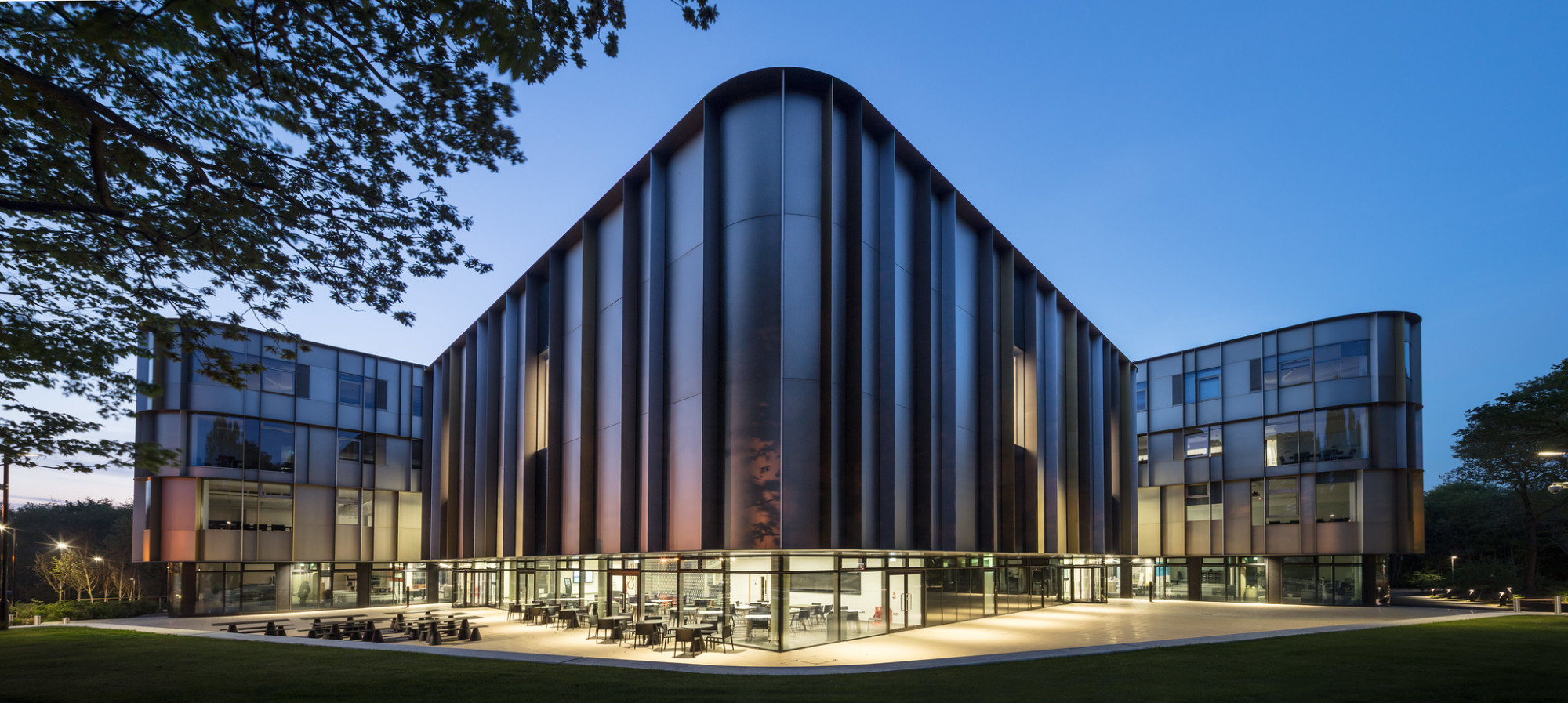
Our campus is surrounded by beautiful woodlands and overlooks the charming city of Canterbury. We have excellent transport links on campus or you can stroll into town on foot.
Intakes
- Jan
- Sep
Application Processing Time in Days: 30
Minimum English Language Requirements
| English Level Description | IELTS (1.0 -9.0) | TOEFL IBT (0-120) | TOEFL CBT (0-300) | PTE (10-90) | |
|---|---|---|---|---|---|
| Expert | 9 | 120 | 297-300 | 86-90 | |
| Very Good | 8.5 | 115-119 | 280-293 | 83-86 | |
| Very Good | 8 | 110-114 | 270-280 | 79-83 | |
| Good | 7.5 | 102-109 | 253-267 | 73-79 | |
| Good | 7 | 94-101 | 240-253 | 65-73 | |
| Competent | 6.5 | 79-93 | 213-233 | 58-65 | |
| Competent | 6 | 60-78 | 170-210 | 50-58 | |
| Modest | 5.5 | 46-59 | 133-210 | 43-50 | |
| Modest | 5 | 35-45 | 107-133 | 36-43 | |
| Limited | 4 | 32-34 | 97-103 | 30-36 | |
| Extremely Limited | < 4 | < 31 | < 93 | < 30 |
Job Opportunity Potential
In these appointments, you will have up to 45 minutes to talk to a careers adviser about whatever career-related topic is important to you. Topics of conversation could include:
- I have no idea what I want to do after I graduate, what are my options?
- What jobs can I get with my degree?
- How do my skills fit in the labour market?
- I’m interested in taking a gap year after I graduate and I want to plan something employers will value.
- I’m thinking of leaving/changing my course and want to talk through the pros and cons.
- I’m interested in doing a masters or PhD, what are my options?
- I’m not sure how to disclose sensitive information to an employer.
A guidance interview is:
Impartial
A careers adviser will not recommend one route to you over another. They are there to help you explore the options objectively.
Challenging
Careers advisers may question your goals and help you to look at the disadvantages as well as the advantages. This is not to put you off, but to help ensure you have thought it through.
Supportive
The meetings are very informal and relaxed. Careers advisers are there to help you discuss things in a safe environment.
Part of a process
Career choice is a process not an event. A guidance interview is a good starting point but you will need to do further research and continuously update your action plan.
PSW Opportunity
- 2 Years PSW is applicable after completing a minimum duration of 9 months course (like- Undergraduate, Postgraduate Level)
- 3 Years PSW is applicable after completing PhD level courses.
Admission Requirement / Eligibility Criteria
For entry to a Kent postgraduate degree programme (Master’s), Indian students typically need to have completed a three or four-year undergraduate degree (Honours Bachelor degree or Professional degree) at an accredited university or college. General Bachelor degrees may sometimes be considered. Exact requirements will depend on the postgraduate degree you are applying for and the institution you have studied at.
For programmes that require a 2:1 we usually ask for a First Class degree, a final CGPA of 6.0/10, or 60%. Students from top institutions may be considered with a high Second Class degree, a final CGPA of 5.5/10, or 55%.
For programmes that require a 2:2 we usually ask for a high Second Class degree, a final CGPA of 5.5/10, or 55%
Some, but not all, postgraduate programmes require your undergraduate degree to have a related major. Some postgraduate programmes may require work experience in a relevant field or at a certain level.
General postgraduate programmes
IELTS (including IELTS Indicator)
6.5 overall (with a minimum of 6.0 in R&W; 5.5 in S&L)
PTE Academic
62 overall with 60 in each subtest
CAE/CPE
176 overall (with a minimum of 169 in R&W; 162 in S&L)
TOEFL iBT
90 overall (with a minimum of 22 in R; 21 in W; 17 in L; 20 in S)
- Course Type: Full Time
- Course Level: Masters/PG Degree
- Duration: 02 Year
-
Total Tuition Fee:
45400 GBP
Average Cost of Living: 13632 GBP /year
Application Fee: N/A
Similar Programs
- MSc Healthcare Management with Industrial Placement at University of Kent
- MSc Forensic Psychology at University of Kent
- MSc Data Science with an Industrial Placement at University of Kent
- MSc Data Science at University of Kent
- MSc Conservation Science at University of Kent
- MSc Computer Science with an Industrial Placement at University of Kent